
Views: 0 Author: Site Editor Publish Time: 2026-06-12 Origin: Site


Procuring reliable environmental monitoring equipment goes beyond reading specification sheets. It requires evaluating the long-term viability of both the hardware and the partner behind it. A misguided procurement choice often leads to significant operational disruptions and costly liabilities. You need accurate environmental data to ensure safety and maintain compliance. Whether for industrial safety, commercial building compliance, or specialized environmental research, inaccurate data carries high operational risks.
Decision-makers must thoroughly vet the ecosystem supporting their monitoring devices. You cannot afford blind spots in hazard detection or facility management. This guide provides a definitive framework for evaluating suppliers. We will compare various sensor technologies and outline practical ways to avoid common procurement pitfalls. You will learn exactly how to build a robust monitoring infrastructure. By the end of this article, you will know how to confidently separate industry-leading manufacturers from vendors selling repackaged consumer-grade sensors.
Accuracy is verified, not claimed: Top-tier suppliers provide independent calibration certificates and align with standards like EPA testing protocols.
Ecosystem matters: The best hardware fails without secure data integration, API access, and reliable long-term software support.
Form factor dictates function: A holistic deployment often requires mixing fixed continuous monitors with specialized handheld gas detectors.
You must establish clear parameters before engaging any equipment supplier. A vague request for proposals invites mismatched solutions. Your first step involves mapping out exact environmental risks. Start by categorizing the specific pollutants requiring constant observation.
Identify the core contaminants relevant to your site. You need to distinguish between basic particulate matter and complex chemical profiles. Basic particulate matter includes PM1.0, PM2.5, and PM10. These mostly apply to general air quality and dust control. Complex chemical profiles involve Volatile Organic Compounds (VOCs), Carbon Dioxide (CO2), Nitrogen Oxides (NOx), and Sulfur Dioxide (SO2). Industrial processes usually demand specific gas monitoring. Do not group all pollutants under a generic air quality umbrella.
Next, determine your specific application environment. Hardware built for an office will fail rapidly in a manufacturing plant. Use the following criteria to define your environmental constraints:
Indoor and Commercial Spaces: Focus heavily on HVAC integration capabilities. Look for hardware supporting WELL or LEED certification compliance. Occupant health remains the primary driver here. Devices need to blend into office environments visually while remaining highly sensitive.
Industrial and Outdoor Sites: Focus explicitly on ruggedization. High Ingress Protection (IP) ratings are non-negotiable. You must account for extreme temperature tolerance. Ask suppliers how they mitigate interference from high wind speeds or fluctuating humidity.
Finally, establish your data utilization goals. Define exactly how your team will use the collected information. Some teams need real-time localized alarms for immediate evacuation. Others require historical compliance reporting to satisfy government regulators. Advanced facilities might need data to trigger automated building management system (BMS) responses. Knowing your end goal dictates the software capabilities you require from a supplier.
Understanding the actual sensors inside a monitor prevents you from buying obsolete technology. Hardware casings often look identical, but internal components vary wildly in quality. You need to assess the underlying sensor technology directly. Different pollutants require vastly different detection mechanisms.
Consider sensor lifespan and expected degradation rates. For carbon dioxide detection, Non-Dispersive Infrared (NDIR) sensors represent the gold standard. They offer excellent stability. For particulate matter, look for laser scattering technology. Volatile Organic Compounds require Photoionization Detectors (PID). Low-cost electrochemical sensors dominate the budget market. However, they drift significantly after twelve to eighteen months. You must ask suppliers about this drift rate upfront.
Evaluate the trade-off between data resolution and response time. Some monitors offer hyper-fast sampling rates. They update readings every second. This speed sometimes compromises long-term data stability. Heavy data smoothing algorithms can hide actual environmental spikes. Ask vendors how their hardware balances immediate response with historical accuracy.
Complex environments demand comprehensive diagnostics. Overlapping gases easily trigger false readings on cheap sensors. High humidity can register as particulate matter on poorly designed devices. You must evaluate if the supplier offers advanced cross-sensitivity filtering. For complex multi-gas environments, check if they provide a Portable Comprehensive Gas Analyzer. This ensures your team can isolate specific chemical signatures accurately. It prevents false alarms caused by harmless background gases.
Sensor Technology | Target Pollutants | Typical Lifespan | Common Procurement Pitfalls |
|---|---|---|---|
NDIR (Infrared) | Carbon Dioxide (CO2) | 10+ Years | Susceptible to extreme physical shock. |
Laser Scattering | PM1.0, PM2.5, PM10 | 3-5 Years | High humidity causing false dust readings. |
PID (Photoionization) | VOCs, Complex Solvents | 1-3 Years | Requires frequent lamp cleaning/replacement. |
Electrochemical | CO, NOx, SO2, O3 | 12-24 Months | Severe zero-drift over time; cross-sensitivity. |
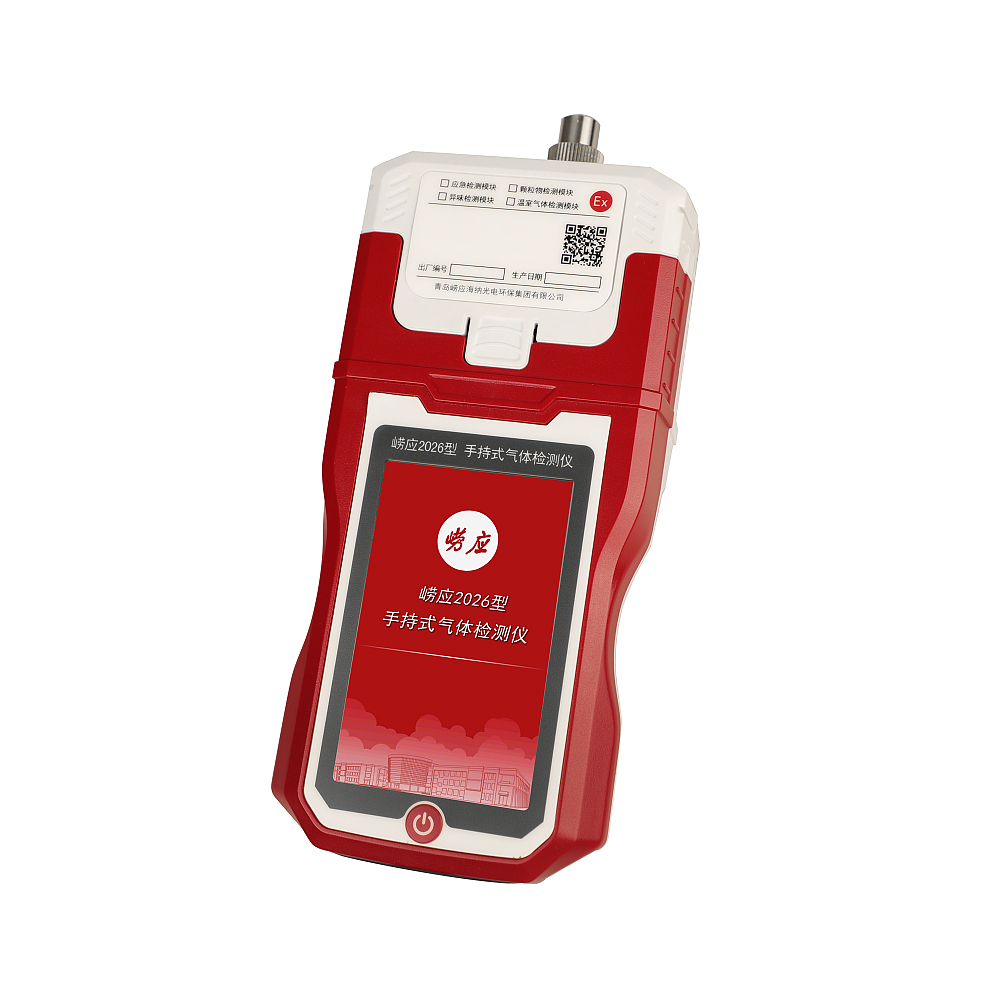
A single type of monitor rarely solves all facility challenges. Effective environmental management requires a layered approach. You must map out where continuous observation is necessary versus where spot-checking suffices. Form factor directly dictates functional capabilities.
Continuous fixed solutions serve as the backbone of any deployment. They establish long-term baselines. They are critical for continuous BMS integration and historical compliance. Selecting the right supplier for an Ambient Air Quality Monitor network involves checking specific infrastructure requirements. You need robust mounting hardware built for harsh conditions. Continuous power solutions are vital. Look for Power over Ethernet (PoE), hardwired connections, or integrated solar panels. The supplier must also offer localized data storage redundancies. This prevents critical data loss during sudden network outages.
Mobile solutions fill the gaps left by fixed networks. They are essential for worker safety and active leak detection. Personnel use them for localized hazard assessments in confined spaces. Fixed monitors only tell you that a problem exists in a general area. Mobile tools help you find the exact source.
A key supplier requirement is a diverse product lineup. They should offer a ruggedized Handheld Gas Detector alongside their fixed units. This complements the main network perfectly. It allows ground personnel to investigate localized anomalies flagged by the fixed system safely. Buying fixed and mobile units from the same ecosystem reduces training time and simplifies maintenance.
Here is a deployment summary chart comparing the two form factors:
Deployment Feature | Fixed Continuous Monitors | Portable / Handheld Devices |
|---|---|---|
Primary Use Case | Baselines, compliance, automated HVAC control | Worker safety, leak tracing, confined space entry |
Data Logging | Continuous 24/7 cloud or local server uploads | Session-based or shift-based local recording |
Power Source | Hardwired, PoE, or Solar panels | Rechargeable lithium-ion batteries |
Supplier Requirement | Robust mounting, API integration, data redundancy | High drop-test ratings, fast pump response times |
The best hardware becomes useless without a reliable support ecosystem. Environmental sensors drift naturally over time. Calibration infrastructure separates industry leaders from transactional sellers. You must understand how the supplier handles this inevitable drift.
Examine their calibration infrastructure closely. Look for innovative zero-calibration features. Many modern devices offer swap-and-go sensor modules. This allows you to replace a degrading sensor in seconds without removing the entire monitor from the wall. Ensure the supplier provides readily available NIST-traceable calibration gases. If they cannot supply traceable gases, you cannot trust their hardware accuracy.
Software and data ownership represent another major evaluation dimension. Avoid vendors utilizing closed ecosystems. You should never pay exorbitant recurring fees just to access your own facility data. Demand open Application Programming Interfaces (APIs). Compatibility with MQTT or Modbus protocols is essential for industrial environments. These protocols allow monitors to speak directly to your existing control systems. Enterprise buyers must also verify clear data privacy and security protocols. Ask for SOC 2 compliance documentation before signing any contracts.
Regulatory alignment serves as a strong trust signal. You need suppliers who build products according to established testing methodologies. Check if their manuals reference EPA siting standards. Inquire about MCERTS certification for European markets. For commercial real estate, check if their accuracy parameters align with WELL Building standards. A supplier actively referencing these frameworks demonstrates deep industry expertise.
Navigating the procurement process requires a critical eye. Many vendors use slick marketing to obscure hardware flaws. You need to watch out for specific warning signs during vendor presentations. Identifying these red flags early saves significant frustration later.
Be highly skeptical of "black box" algorithms. Some suppliers refuse to explain how they calculate their Air Quality Index (AQI). They hide behind proprietary software claims. In reality, aggressive smoothing algorithms often mask poor sensor performance. They filter out critical environmental spikes. You need transparency on how the device handles humidity interference. If the vendor cannot explain their data processing clearly, walk away.
Avoid suppliers lacking field-tested evidence. A spec sheet tested in a pristine laboratory means very little. Real-world conditions are messy. Demand case studies from environments similar to yours. Ask for independent lab validations. Request references from beta-testers in your specific industry. If a vendor targets heavy manufacturing but only provides office building references, their hardware will likely fail your requirements.
Poor post-sale support structures indicate a transactional supplier. You need a consultative partner. Look out for a lack of clear Service Level Agreements (SLAs). If they cannot define their Return Merchandise Authorization (RMA) process clearly, expect long downtimes. Ask about their technical troubleshooting workflow. A supplier selling sophisticated monitors must have dedicated support engineers, not just basic call center staff.
Selecting the right supplier is a careful balancing act. You must align hardware accuracy, software flexibility, and transparent maintenance logistics. Do not treat environmental monitors as standard IT commodities. They require specialized calibration support and rigorous physical resilience. A poorly chosen network produces false safety data and complicates regulatory reporting.
Your next steps should involve structured vendor evaluation. Shortlist two to three potential vendors based on the criteria discussed. Request a highly technical data sheet from each. Focus specifically on their cross-sensitivity data. Ask for a sample independent calibration certificate to verify their accuracy claims. Finally, mandate a small-scale pilot deployment. Test the hardware and the software dashboard under real facility conditions before finalizing any wide-scale rollout.
A: It depends on the sensor type and environment. Electrochemical gas sensors typically require bump testing and calibration every three to six months. High-end optical sensors for particulates may only need annual maintenance. Heavy industrial zones accelerate sensor degradation. Always defer to the manufacturer's specific maintenance schedule to maintain data integrity.
A: No. Handheld devices are designed for localized safety and immediate hazard exposure checks. They lack the continuous data logging and spatial mapping capabilities of fixed ambient networks. They cannot trigger building-wide automated ventilation responses. Both form factors serve distinct purposes and should be used in tandem.
A: Commercial-grade monitors prioritize individual replaceable sensor modules, traceable calibration protocols, ruggedized housing, and open APIs. They survive harsh physical environments. Consumer monitors often use cheaper, soldered sensors with aggressive data smoothing algorithms. These consumer algorithms hide actual response times and fail under industrial scrutiny.


