
Views: 0 Author: Site Editor Publish Time: 2026-11-05 Origin: Site


Accurate particulate matter measurement is no longer just an academic exercise. It serves as a critical regulatory requirement and a core component of industrial and municipal risk management. Particulate matter deeply impacts human respiratory and cardiovascular health. For EHS managers, environmental consultants, and public health officials, selecting the right measurement methodology requires careful consideration. You must balance strict compliance standards against practical deployment realities. Operational limitations, maintenance schedules, and data latency all play pivotal roles in your decision.
This guide deconstructs the established and emerging methodologies for measuring ambient PM10 and PM2.5. We provide a robust decision framework. You will learn how to evaluate various instrument types based on deployment scalability, data accuracy, and ongoing maintenance demands. By understanding these technological nuances, you can build a resilient, fully compliant environmental monitoring network.
Regulatory Status Dictates Methodology: Federal Reference Methods (FRM) utilizing gravimetric analysis remain the gold standard for compliance, though they lack real-time data capabilities.
Continuous Monitoring is the Industry Standard: Beta Attenuation Monitors (BAM) and Tapered Element Oscillating Microbalances (TEOM) provide continuous, highly accurate data suitable for Federal Equivalent Method (FEM) reporting.
Optical Sensors Offer Scale, Not Certification: Light-scattering sensors provide high-density, real-time spatial awareness but require rigorous co-location and calibration against reference instruments to mitigate environmental interference (like high humidity).
Organizations face intense dual pressures in modern environmental management. They must maintain strict compliance with local and federal clean air mandates. Simultaneously, they must provide timely, actionable data to protect community health. Industrial operations also rely on this data to optimize their operational processes. Reliable particulate matter measurement programs form the foundational core of these efforts.
When facilities release excess emissions, they face severe regulatory scrutiny. Public awareness regarding local air quality has skyrocketed. Communities demand operational transparency. Consequently, your monitoring data must withstand intense public and legal review.
Success criteria for measurement programs depend on several specific operational factors:
Defensibility of data: Your records must hold up during rigorous audit scenarios conducted by state or federal environmental protection agencies.
Reliability of uptime: Instruments must operate continuously across adverse environmental conditions, including extreme temperatures and high wind events.
Integration capabilities: Modern monitoring networks must sync seamlessly into existing environmental data management systems or cloud-based dashboards.
Selecting the wrong technology introduces significant operational risks. Deploying a non-certified instrument for compliance reporting risks invalidating months of data. This misalignment often triggers severe regulatory fines. Conversely, deploying highly complex, labor-intensive reference samplers for simple fence-line monitoring wastes critical operational bandwidth. You must align your chosen hardware precisely to your explicit data goals.
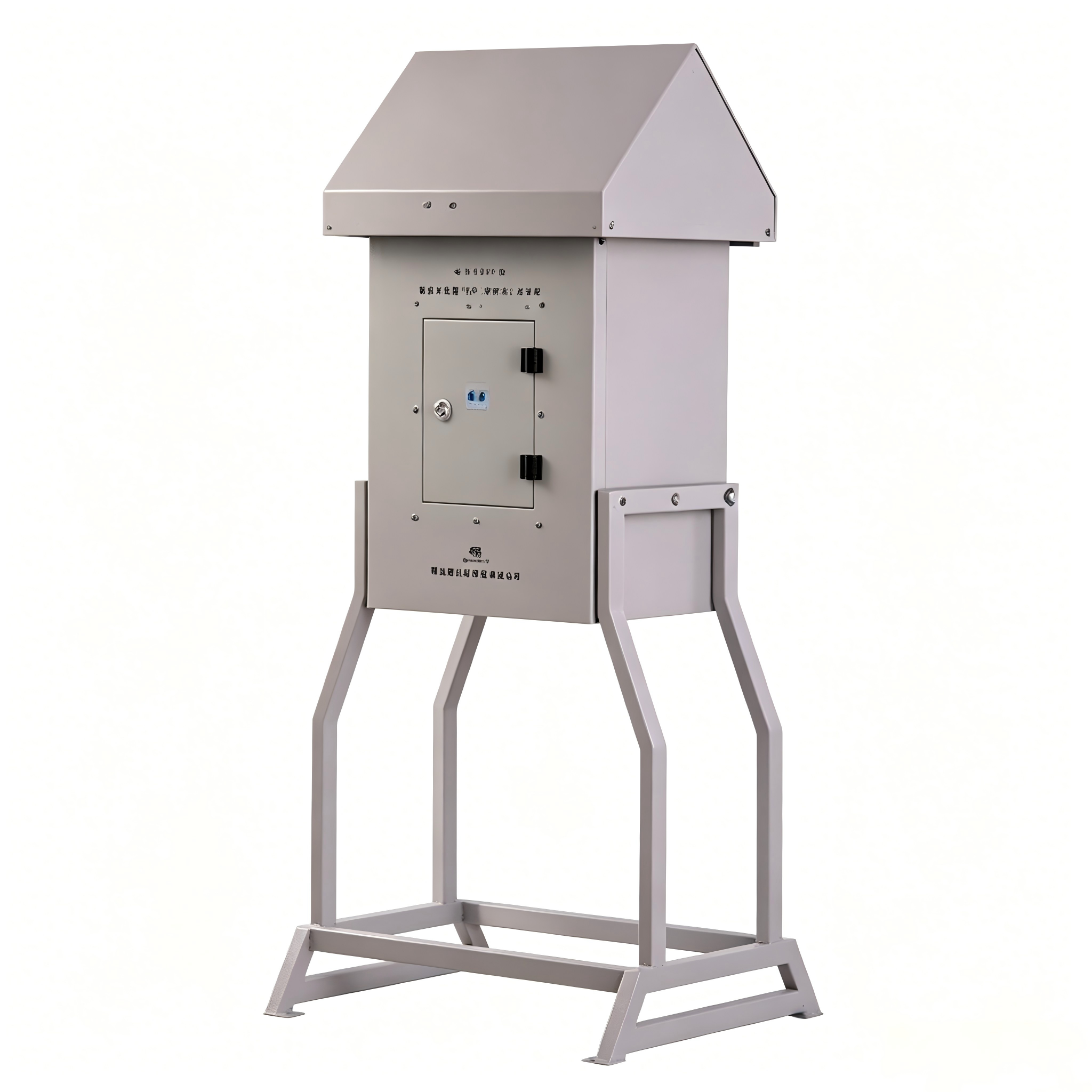
Gravimetric analysis represents the historical and regulatory foundation of air quality compliance. The physical mechanism is straightforward but highly rigorous. A pump draws a precisely known volume of ambient air through a pre-weighed Teflon or quartz filter. This sampling typically occurs over a strict 24-hour period.
After the sampling cycle concludes, technicians carefully transport the filter to a climate-controlled laboratory. The lab strictly conditions the filter to specific temperature and humidity levels for 24 hours. Analysts then re-weigh the filter using a highly sensitive microbalance. The difference in mass determines the exact particulate concentration in the sampled air volume.
Different field scenarios demand different instrument types. For historical Total Suspended Particulates (TSP) or coarse PM10 monitoring, organizations often deploy a high-flow ambient particulate sampler. These robust devices move massive volumes of air, capturing larger suspended particles efficiently.
However, manual filter changes every 24 hours heavily strain field teams. To solve this labor issue, facilities frequently upgrade to a sequential ambient particulate sampler. This modern instrument holds multiple filter cassettes securely in an automated carousel. The robotic system automatically swaps filters at midnight. This automation allows for continuous multi-day or multi-week unattended operation.
Gravimetric methods remain best for baseline regulatory compliance. They offer unmatched legal defensibility in court or during EPA audits. They perfectly establish reliable local reference points for broader regional monitoring networks.
Gravimetric methods provide high accuracy, but they fail to provide immediate awareness. Continuous ambient air monitoring instruments bridge this crucial gap. They deliver automated, near-real-time mass measurements while maintaining strict regulatory standards.
The Beta Attenuation Monitor (BAM) acts as a prominent technology in this category. It measures the attenuation of low-energy beta rays emitted by a internal radioactive source. The instrument directs these rays across a clean spot on a continuous filter tape. As air flows through the tape, ambient particles accumulate. The BAM measures the beta ray transmission again. The reduction in transmitted beta particles directly correlates to the deposited particulate mass.
Tapered Element Oscillating Microbalances (TEOM) take a mechanical physics approach. A TEOM system features a hollow glass tube oscillating at a specific baseline frequency. The system pulls air through a small filter attached to the tip of this tube. As particulate mass accumulates on the filter, the tip becomes heavier. This added mass lowers the oscillation frequency. Internal microprocessors calculate the precise mass change based on this frequency shift.
These continuous instruments work best for official state or national monitoring networks. They excel at near-real-time public reporting. They seamlessly handle automated Federal Equivalent Method (FEM) compliance requirements.
Recent advancements in microelectronics have popularized optical and light-scattering sensors. Unlike BAMs or gravimetric samplers, these devices do not measure physical mass directly. Instead, they use integrated lasers or infrared LEDs to illuminate an internal sampling chamber.
When particles pass through the concentrated light beam, they scatter the light. High-speed photodetectors measure the intensity and angle of this scattered light. Onboard microprocessors use complex mathematical algorithms to count the individual particles. They then estimate the overall aerosol mass based on assumed particle density and refractive index.
These optical mechanisms process data incredibly fast. They suit high-resolution spatial mapping across large urban areas perfectly. Facilities use them heavily for indicative fence-line monitoring around active construction sites. They supplement primary reference networks efficiently by filling in geographic data gaps.
You must first determine the exact certification requirements of your monitoring project. In the United States, the EPA designates specific instruments as Federal Reference Methods (FRM) or Federal Equivalent Methods (FEM). European environmental frameworks rely on similar standards, such as EN 16450.
Strict compliance projects cannot compromise on formal certification. An air quality permit often explicitly requires FRM or FEM verified data.
Cautionary Note: Many commercial sensor manufacturers use marketing terms like "research-grade," "highly accurate," or "factory-calibrated." These descriptive terms do not substitute for official agency certification. If your facility faces regulatory enforcement, uncertified optical sensor data will not defend you. Always verify the instrument's official regulatory approval listing before deployment.
Different monitoring objectives require different data delivery speeds. Latency heavily influences operational response times during emission events.
Gravimetric methods inherently provide retrospective data. Field technicians must collect the filters physically. Laboratories must condition and weigh them meticulously. This entire process often delays the final data delivery by several weeks. You cannot use gravimetric methods to trigger immediate dust suppression systems.
BAM and TEOM systems solve this latency bottleneck. They provide highly accurate, rolling hourly averages. This reliable resolution suits daily Air Quality Index (AQI) reporting and operational tracking perfectly.
Optical sensors offer extreme reporting speed. They deliver minute-by-minute or even second-by-second data resolution. This rapid feedback proves invaluable for identifying acute, short-term emission spikes. However, this high temporal resolution comes at the expense of absolute mass accuracy.
Evaluating scalability requires analyzing your team's available operational bandwidth. Equipment demands regular, structured maintenance. You must account for this specialized labor.
Gravimetric samplers demand intensive manual labor. Technicians must physically visit remote sites to retrieve and swap filters constantly. You also must manage ongoing laboratory analysis workflows. This manual intensity naturally limits the total number of stations a small team can operate.
BAMs automate the daily filter swaps but still require routine mechanical attention. Technicians must replace the filter tape rolls periodically. They also need to clean the beta source pathways and calibrate the intake flow rates using certified audit devices.
Optical sensors deploy effortlessly across large geographic areas. They require minimal physical infrastructure. However, they present hidden maintenance challenges. You must perform frequent algorithm adjustments to maintain data accuracy. You also need to clean internal optical lenses and manage heating tubes to prevent moisture bias. Eventually, internal sensor degradation forces complete hardware replacement.
Operational Comparison of Particulate Matter Measurement Technologies
Technology Type | Data Resolution | Regulatory Status | Routine Maintenance Burden | Typical Deployment Scale |
|---|---|---|---|---|
Gravimetric (High-Flow/Sequential) | 24-Hour Retrospective | FRM (Gold Standard) | High (Filter handling, lab weighing) | Single point to small reference networks |
Continuous Mass (BAM/TEOM) | 1-Hour Near Real-Time | FEM (Certified Equivalent) | Medium (Tape swaps, flow checks) | Regional compliance reporting networks |
Optical (Light-Scattering) | 1-Minute Real-Time | Indicative (Uncertified) | Low to Medium (Lens cleaning, data QA) | High-density hyper-local grid deployments |
Instrument location heavily dictates data validity. You cannot simply place a monitor wherever it fits conveniently on a rooftop. Instruments must sit according to strict aerodynamic criteria outlined by environmental regulators.
Microclimates severely impact localized readings. If you place a sampler too close to a busy intersection, it will over-report localized tailpipe emissions. This skewed reading fails to represent the broader neighborhood air quality. Siting guidelines dictate specific parameters. You must maintain minimum distances from roadways based on traffic volume. You must ensure clear vertical space above the intake probe. You also must keep instruments away from the drip lines of large trees. Ignoring these criteria immediately invalidates your data.
Humidity represents the biggest environmental challenge for real-time monitoring. High ambient moisture fundamentally alters aerosol behavior in the atmosphere.
Many particulate particles are naturally hygroscopic. They absorb water vapor from the surrounding air. When humidity exceeds 70%, these aerosols swell significantly. This swelling poses a massive measurement problem for optical sensors. The enlarged, water-logged particles scatter much more light. The sensor misinterprets this scattered light as an extreme spike in solid particulate mass.
Professional continuous monitors mitigate this humidity variable proactively. They utilize smart heated inlet tubes. These internal tubes gently warm the incoming air stream, evaporating the excess moisture before the air reaches the measurement chamber. Advanced systems also deploy dynamic humidity-correction algorithms. These software solutions mathematically adjust the reported mass downwards when relative humidity spikes. Without these interventions, optical sensors produce wildly inaccurate data during morning fog or rain events.
No instrument maintains perfect accuracy indefinitely. Electronic components degrade over time. Mechanical pumps experience inevitable wear. You must implement robust Quality Assurance and Quality Control (QA/QC) protocols to maintain data integrity.
Standard QA/QC operational realities include several strict procedural requirements. You must perform regular zero and span checks using filtered, particulate-free air. This ensures the instrument properly reads absolute zero. You must conduct routine flow audits using certified flow meters. If the intake pump pulls air too slowly, the aerodynamic particle separation fails entirely.
Furthermore, deploying optical sensors requires a comprehensive co-location strategy:
Identify a central, reference-grade BAM or gravimetric monitoring station.
Place your uncertified optical sensors directly next to the reference instrument for several weeks.
Compare the real-time optical data against the certified mass measurements meticulously.
Calculate a local calibration factor to correct the optical sensor's baseline bias.
This strict co-location methodology anchors cheaper sensors to a trustworthy reference point. It maintains network reliability over long operational periods.
There is no universal "best" particulate matter measurement instrument. The final decision rests entirely on your specific operational use case. Regulatory compliance strictly requires gravimetric analysis or automated equivalent methods like BAMs and TEOMs. Conversely, rapid, hyper-local spatial awareness heavily favors dense networks of optical light-scattering sensors.
EHS teams and operational managers should map their specific regulatory obligations clearly. You must identify your internal data latency tolerances accurately. Evaluate the true maintenance bandwidth of your field technicians realistically. Perform this thorough technical assessment before initiating any formal procurement process for ambient air monitoring instruments. By carefully aligning your monitoring objectives with the correct underlying technology, you ensure robust data defensibility, operational resilience, and sustained environmental compliance.
A: High-flow samplers operate at higher volumetric rates, typically exceeding 40 cubic feet per minute (CFM). Environmental professionals use them primarily for capturing Total Suspended Particulates (TSP) or coarse PM10. Low-volume samplers operate at a precise 16.7 liters per minute. This specific flow rate mimics human respiration rates perfectly. Regulators strictly mandate low-volume systems for official PM2.5 and PM10 FRM measurements.
A: Generally, no. Most optical sensors do not hold FRM or FEM status. Particle density variations, optical properties, and ambient humidity introduce significant measurement biases. Regulators consider this uncertainty unacceptable for strict legal compliance or permitting. You should utilize optical sensors strictly as supplementary, indicative tools to track spatial trends and identify acute emission spikes.
A: Sequential samplers hold multiple pre-loaded filters simultaneously within an internal carousel. The internal robotics automatically switch these filters exactly at midnight. This sophisticated mechanism allows for days or weeks of continuous daily sampling. A technician does not need to visit the remote monitoring site every 24 hours just to swap filters manually, saving immense labor.
A: Water vapor frequently condenses on filters or scatters light erratically inside optical measurement chambers. Monitors mistakenly register this moisture as solid particulate mass, creating false spikes. Professional-grade continuous monitors mitigate this issue effectively. They use heated inlet tubes to dry the sample air physically, or they apply smart moisture-correction algorithms to normalize the data digitally.


