
Views: 0 Author: Site Editor Publish Time: 2026-11-15 Origin: Site


Failing to accurately quantify Volatile Organic Compounds (VOCs) risks severe regulatory penalties. Operational shutdowns and serious health hazards often follow poor emission monitoring practices. Plant managers must treat exhaust emissions as a critical operational risk. Industrial flue gas presents a remarkably harsh and unforgiving environment. High temperatures, heavy moisture, and corrosive gases easily destroy standard commercial air quality sensors. Standard devices simply cannot handle extreme physical stress. You need rugged, specialized equipment to survive these extreme conditions without failing. We wrote this guide to provide plant managers and environmental engineers a clear, objective framework. You will learn how to evaluate different methodologies effectively. We will compare continuous and periodic measurement solutions in detail. This information helps you select the exact instrumentation required for regulatory compliance and process control.
Industrial VOC testing requires specialized equipment capable of surviving high-temperature, high-humidity stack environments without sample degradation.
The choice between Flame Ionization Detectors (FID), Photoionization Detectors (PID), and sorbent-based sampling depends entirely on whether you need real-time Total VOC (TVOC) data or precise chemical speciation.
Selecting VOC monitoring instruments must factor in regulatory frameworks (e.g., EPA Method 25A, EN 12619), calibration drift risks, and maintenance overhead.
Portable FID units are the industry standard for real-time compliance spot-checking, while sorbent tubes remain critical for detailed laboratory compound analysis.
International and regional regulatory bodies establish extremely strict emission limits. Agencies like the EPA and UNECE dictate exact compliance baselines. They do not merely tell you what emissions to limit. They specify exactly how you must measure those emissions. Standards like EPA Method 25A or EN 12619 leave no room for guesswork. Facilities must strictly adhere to these prescribed methodologies.
Regulators demand irrefutable proof of compliance. You cannot rely on estimated emission factors. Industrial plants, including petrochemical refineries and printing facilities, face constant scrutiny. An unexpected audit can halt production immediately. Therefore, robust measurement protocols serve as your primary legal defense.
Accurate data impacts your financial and operational health significantly. Precise emission measurements prevent you from over-engineering expensive abatement systems. For example, running a Thermal Oxidizer blindly wastes massive amounts of natural gas. When you know your exact emission levels, you can optimize combustion parameters. This optimization reduces your daily energy consumption drastically.
Plant operators face a complex decision matrix. You must balance the upfront capital expenditure of monitoring hardware. At the same time, you must account for recurring operational costs. These include expensive calibration gases, spare parts, and routine maintenance labor. Investing in unreliable hardware ultimately leads to costly compliance failures. You must avoid cheap sensors. They break down frequently in harsh environments.
You must evaluate exhaust stack instrumentation objectively. Each technology carries distinct strengths and unavoidable limitations. We break down the most common solutions below.
This technology uses a hydrogen flame to ionize organic compounds. Once ionized, the system measures the resulting electrical current. Higher current indicates a higher concentration of hydrocarbons. The detector responds rapidly to concentration changes.
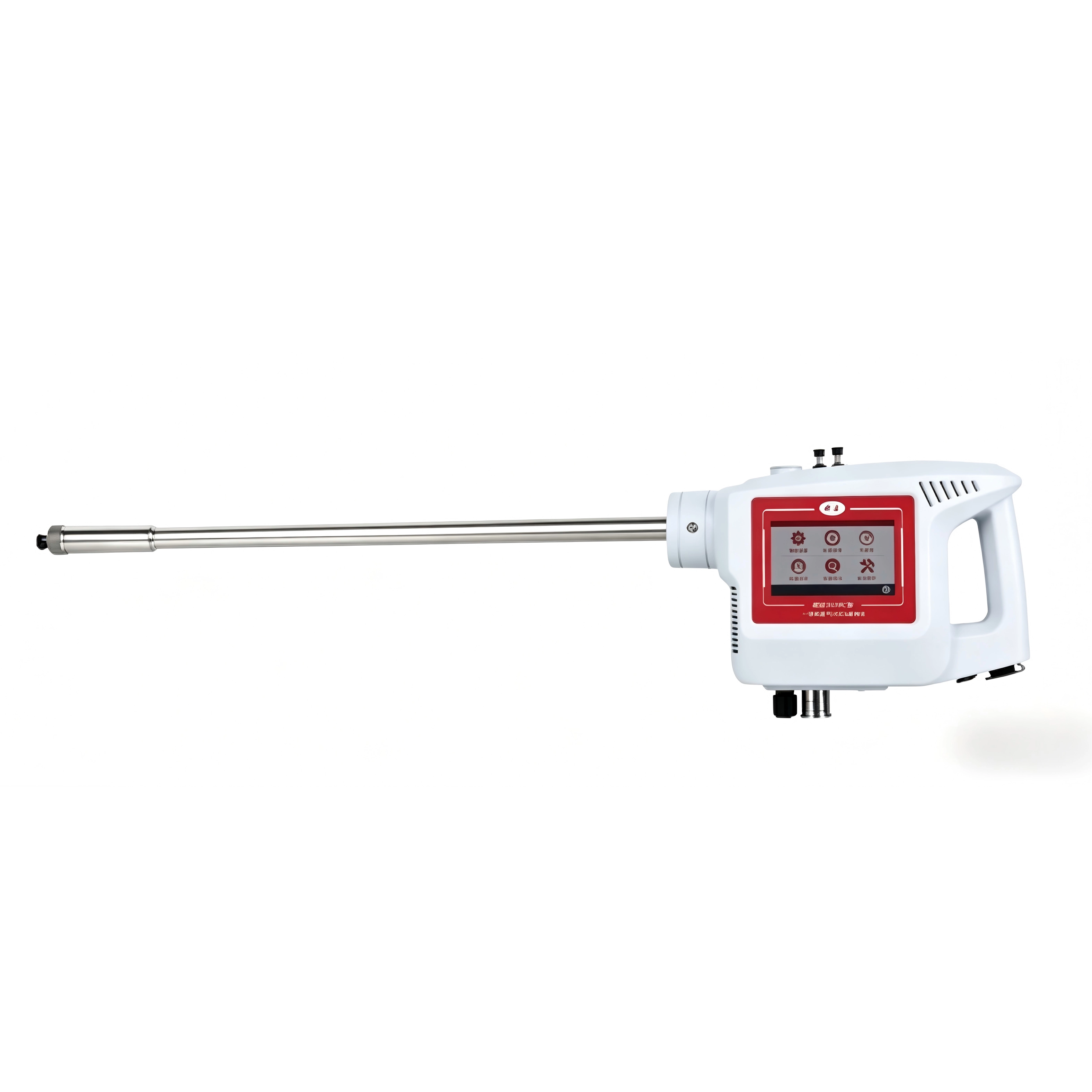
It works best for real-time, continuous monitoring. Facilities use it to measure Total Hydrocarbons (THC) or TVOCs. Industry experts consider this technology the absolute gold standard. It strictly satisfies regulatory compliance frameworks like EPA Method 25A. You will often see testing teams deploying a portable FID hydrocarbon analyzer for periodic spot-checking and regulatory audits.
However, this technology has strict operational limitations. It requires a constant supply of high-purity hydrogen gas. Storing and handling compressed hydrogen introduces significant safety and logistical challenges. Furthermore, an FID cannot distinguish between specific organic compounds. It provides no chemical speciation data whatsoever. It only gives a total aggregate number.
This approach actively draws exhaust gas through a heated probe. The system pushes the gas into tubes packed with specific adsorbent materials. Technicians frequently use Tenax as the primary adsorbent matrix. Afterward, laboratories analyze these tubes using Gas Chromatography-Mass Spectrometry (GC-MS).
It excels at providing highly accurate chemical speciation. Sometimes, environmental regulations require quantifying specific toxic compounds. You might need to measure exact levels of benzene, toluene, or formaldehyde. In these cases, a sorbent-tube flue gas VOC sampler outperforms other methods. It isolates individual hazardous air pollutants perfectly.
Despite its accuracy, this method provides only a historical snapshot. You do not receive real-time operational data. By the time lab results return, days may have passed. Additionally, the tubes remain highly vulnerable to chemical saturation. Miscalculated flow rates or excessively long sampling times will ruin the sample entirely.
Photoionization Detectors offer quick, low-cost screening of certain aromatics. They use ultraviolet light to ionize gas molecules. However, industrial flue gas presents a uniquely difficult challenge. Standard PID sensors struggle constantly against high moisture content. Mixed gas matrices cause severe signal quenching. This quenching leads to highly inaccurate emission readings. PIDs frequently underreport actual concentrations in wet stacks.
FTIR presents a high-end alternative for continuous multi-gas speciation. It uses infrared light absorption to identify unique molecular signatures. It can measure dozens of compounds simultaneously. Unfortunately, FTIR systems require a massive initial investment. The internal optics remain notoriously fragile in harsh industrial settings. Vibration and heat easily misalign the mirrors. Interpreting FTIR spectral data also demands highly specialized analytical expertise.
Plant engineers must apply rigid evaluation criteria before purchasing equipment. A poorly selected instrument will inevitably fail during a compliance audit. We recommend evaluating your needs against four primary criteria.
Sample Integrity (The "Heated Line" Rule): Maintaining sample integrity requires strict adherence to the heated line rule. You must heat the entire sample path continuously. The probe, filter, and sample line must reach exactly 191°C (375°F). This specific temperature prevents heavy volatile organics from condensing. If they condense before reaching the sensor, your readings will fail. You lose critical sample mass to the tubing walls. Unheated lines guarantee audit failure.
Moisture and Particulate Handling: Industrial exhaust streams typically contain saturated moisture and heavy particulates. You must assess how different instruments handle these aggressive conditions. Moisture can quickly blind an unprotected sensor. Therefore, high-grade particulate filters are absolutely necessary. They protect sensitive analyzer capillaries from clogging and subsequent physical damage. You must replace these filters regularly.
Speciation vs. Total VOCs (TVOC): Your hardware choice must map directly to your permit requirements. Read your permit carefully. If it specifies Total VOCs, an FID remains optimal. It counts all carbon bonds effectively. However, many permits specify individual Hazardous Air Pollutants (HAPs). In those scenarios, you must utilize sorbent tubes or GC/FTIR solutions.
Data Integration & Scalability: Modern facilities demand seamless data integration and high scalability. You should consider whether the instrument supports standard industrial protocols. Common protocols include Modbus and standard 4-20mA analog outputs. Seamless integration feeds data directly into your Distributed Control System (DCS). It also supports your Data Acquisition and Handling System (DAHS). This connectivity enables automated reporting and instant alarms.
Table: Hardware Selection Matrix
Technology | Primary Use Case | Strengths | Weaknesses |
|---|---|---|---|
FID Analyzer | Total VOCs (TVOC) | Fast response, regulatory standard | Requires hydrogen gas, no speciation |
Sorbent Tubes | Chemical Speciation | Identifies individual HAPs | Delayed lab results, saturation risks |
PID Sensors | Basic Screening | Low cost, highly portable | Severe moisture interference |
FTIR Systems | Continuous Speciation | Multi-gas analysis in real-time | High cost, fragile optics |
Deploying industrial sensors involves significant ongoing challenges. All continuous monitors experience inevitable zero and span drift over time. This calibration drift severely degrades measurement accuracy. Regulators demand strict mitigation protocols. Facilities must perform automated or manual daily calibrations. You must use certified span gases to verify system accuracy. Selecting high-quality VOC monitoring instruments reduces the frequency of manual interventions, but routine calibration remains mandatory. Neglecting this maintenance invalidates your data.
Operators must guard vigilantly against the "False Zero" risk. Improper sample flow rates frequently cause this dangerous phenomenon. Clogged sample filters physically block gas from reaching the detector. The instrument displays a low or zero reading. This gives operators a false sense of regulatory compliance. An unexpected audit during a false zero event guarantees severe penalties. You should monitor sample pump pressure daily.
Specialized operator training represents another major implementation reality. Advanced equipment requires highly trained personnel for safe operation. Deploying flame-based analyzers requires rigorous safety training. Technicians must understand how to handle compressed hydrogen safely. They must also know how to quickly interpret and troubleshoot flame-out errors. An untrained operator can easily damage a fragile capillary tube during routine cleaning.
Following a structured shortlisting logic prevents expensive procurement mistakes. We recommend a strict three-step approach.
Step 1: Audit the Permit
Always start by reviewing the specific regulatory method. Read the exact citations listed in your facility's air permit. The permit dictates your technological boundaries. If it cites EPA Method 25A, you must buy an FID. Do not purchase equipment based on assumptions.
Step 2: Map the Exhaust Profile
You must document your physical stack conditions thoroughly.
Record the maximum stack temperature.
Measure the absolute moisture content.
Note the expected concentration range, from parts-per-million to volume percentages.
Identify the presence of any highly corrosive background gases.
This profile dictates your entire sample conditioning requirement strategy.
Step 3: Hardware Selection
Finally, choose between a permanent setup or a periodic testing model. Large facilities often install permanent Continuous Emission Monitoring Systems (CEMS). They need uninterrupted compliance monitoring. Smaller operations frequently prefer periodic testing. They combine periodic sampling events with third-party stack testing services. This hybrid approach maintains compliance cost-effectively.
Effective exhaust monitoring requires far more than a simple hardware purchase. It represents a highly complex, system-level engineering challenge. Facilities cannot rely on a one-size-fits-all approach. You must select the technology that matches your exact operational reality. Buyers must fiercely prioritize sample integrity and strict regulatory alignment. You must heavily weigh long-term maintenance realities over initial hardware costs. Always consult with an environmental instrumentation specialist. Review your specific stack conditions and permit requirements carefully before procuring equipment. Investing in proper VOC testing architecture ultimately protects your facility from catastrophic compliance failures.
A: TVOC provides a single aggregate concentration number representing all volatile organics combined. Facilities typically measure this via an FID. Specific testing identifies and quantifies individual chemical compounds separately. Technicians usually achieve this speciation via GC-MS laboratory analysis or sorbent tubes.
A: Exhaust gases cool rapidly upon leaving the stack environment. Unheated sample lines cause excessive moisture and heavy organic compounds to condense immediately. This condensation strips volatile mass from the sample stream. It ruins sample integrity and physically damages analyzer capillaries.
A: Standard PIDs remain generally unsuitable for raw industrial exhaust. They experience severe signal quenching when exposed to high humidity. Moisture blocks the UV light required for photoionization. You can only use a PID if you pair it with highly sophisticated sample conditioning systems.
A: Continuous compliance monitors typically require daily zero and span checks to correct sensor drift. Portable units follow different rules. Technicians must calibrate portable devices immediately before and after each testing event using certified reference gases to guarantee measurement accuracy.


