
Views: 0 Author: Site Editor Publish Time: 2026-06-08 Origin: Site


Organizations often invest significant capital into advanced environmental sensing equipment. A massive gap still exists between equipment procurement and daily operational reality. Even the most sophisticated sensors will yield unreliable data if deployed incorrectly. Poor installation practices rapidly lead to accelerated biofouling and severe baseline drift. They also trigger non-compliant reporting scenarios. These deployment failures quickly erode the financial return of your initial capital investment. We must completely rethink our field deployment strategies.
This article outlines an evidence-based framework for setting up monitoring stations. Following these guidelines ensures representative sampling and strict regulatory compliance. You will also discover practical ways to boost long-term hardware durability. Proper setup transforms raw technological potential into defensible environmental intelligence. Read on to discover how meticulous site selection and rigorous calibration protocols protect your monitoring integrity from day one.
Site selection dictates data integrity; sensors must be placed in well-mixed, representative flow zones away from stagnation.
Proper cable routing, secure mounting, and immediate baseline calibration are non-negotiable for mitigating environmental interference.
Integrating complex sample conditioning requires factoring in precise spatial, power, and ventilation requirements before deployment.
A documented QA/QC handoff protocol ensures accountability and validates system accuracy against regulatory standards.
Installation quality directly connects to your ongoing operational costs. Suboptimal hardware placement drastically increases routine maintenance frequency. It also significantly shortens the lifespan of sensitive instrument components. Equipment failure forces technicians out into the field repeatedly. Every unplanned site visit drains your operational budget. A poorly installed system essentially becomes a financial liability rather than a data asset.
You need clear metrics to judge installation success. We recommend focusing on three core areas to validate your deployment setup:
Data Consistency: You must completely eliminate flow-induced artifacts. The site should show an absolute absence of temperature micro-climates. Consistent data proves the sensor correctly reads the main water body.
Hardware Longevity: Placements must offer strong physical protection. Units need defense against floating debris strikes. You must also prevent burial from unexpected sedimentation. Furthermore, secure locations deter tampering and vandalism.
Maintenance Accessibility: Technicians need easy extraction paths. Routine cleaning should remain simple. Personnel must perform recalibration without requiring specialized rigging or heavy machinery.
Initial placement failures invite massive hidden costs. Retrospective site modifications demand significant engineering labor. Moving established infrastructure disrupts continuous data records. It also forces expensive compliance audits. If your first installation fails regulatory standards, you lose time and money correcting it. Doing it right the first time mitigates these expensive implementation risks.
Site selection serves as the absolute foundation of data integrity. Even perfectly calibrated instruments fail in poorly chosen locations. You must balance scientific sampling needs against physical infrastructure realities. This balancing act requires a methodical evaluation of the entire surrounding environment.
You must identify the primary flow channel. Hydrologists call this the thalweg. Positioning sensors here guarantees a representative sample. Always avoid backwater areas. Steer clear of stagnant eddies or heavily stratified boundary layers. Stagnant zones create localized chemical conditions. These micro-environments do not reflect the overall water body health. The water moving past the sensor must remain continuously well-mixed.
Evaluating the natural environment prevents catastrophic hardware loss. Planners must conduct thorough environmental profiling before breaking ground. We recommend following these precise profiling steps:
Assess seasonal water level fluctuations carefully. Account for extreme flood crests and severe drought drawdowns.
Evaluate local sediment transport mechanisms. Determine the exact risk of sand burial or high-velocity scouring.
Analyze historic biological loads. Identify periods where seasonal algal blooms might overwhelm standard cleaning mechanisms.
Map out potential ice formation patterns. Winter ice sheets can crush expensive protective housings easily.
Security is vital for protecting capital investments. You want rugged, tamper-proof locations. However, you must balance this security against technician access needs. Personnel require safe, predictable entry points. They also need stable power sources nearby. Reliable telemetry coverage remains mandatory for continuous data streaming. Without strong cellular or satellite signals, continuous monitoring becomes impossible. Always verify power and signal stability before finalizing your deployment site.
Physical installation requires rigorous attention to mechanical details. Environmental forces will test every bolt, cable, and housing. You must apply proven engineering best practices to secure your instrumentation. Cutting corners during physical mounting directly compromises your analytical precision.
Installation angle fundamentally matters. Always position sensors at the manufacturer-recommended angle. Proper angling actively prevents bubble accumulation on critical optical windows. It also stops fine sediment buildup inside narrow conductivity cells. You should always utilize rigid, non-corrosive mounting hardware. Marine-grade stainless steel performs exceptionally well. Schedule 80 PVC provides another excellent structural choice. These robust materials effectively eliminate vibration-induced signal noise. Integrating a high-performance Water Quality Monitor demands unshakeable physical support. Flimsy mounts degrade data quality immediately.
You must protect your vulnerable data lines. Implement generous drip loops near junction boxes. Drip loops force moisture to fall away from sensitive electronic connectors. Always use heavy-duty, abrasion-resistant conduits. Conduits defend cables against gnawing wildlife and mechanical wear. Furthermore, you must establish dedicated system grounding. Proper grounding entirely prevents ground loops. It drastically reduces the risk of galvanic corrosion. Galvanic activity directly distorts sensitive electrochemical sensor readings.
Nature immediately attempts to colonize submerged equipment. You must install active mitigation tools immediately upon deployment. Do not wait for algae to appear. Deploy automated mechanical wipers across optical lenses. Install copper mesh guards over open sensor ports. Apply specialized anti-fouling sleeves where applicable. Tailor your entire mitigation strategy to the specific biological load of your selected site.
Symptom / Issue | Probable Cause | Recommended Action |
|---|---|---|
Rapid Baseline Drift | Inadequate biofouling mitigation or sediment buildup. | Verify wiper function. Adjust probe installation angle. |
Erratic Signal Spikes | Vibration from loose mounts or improper grounding. | Tighten mounting hardware. Check ground loop connections. |
Optical Sensor Clouding | Trapped air bubbles on the sensor face. | Reorient probe to a 30-45 degree downward angle. |
Premature Cable Failure | Wildlife damage or lack of strain relief. | Install rigid PVC conduit and secure all loose slack. |
Modern compliance often requires tracking highly specific trace compounds. This pushes organizations beyond simple in-situ probes. Complex sample conditioning introduces entirely new deployment challenges. These advanced systems demand meticulous spatial and electrical planning.
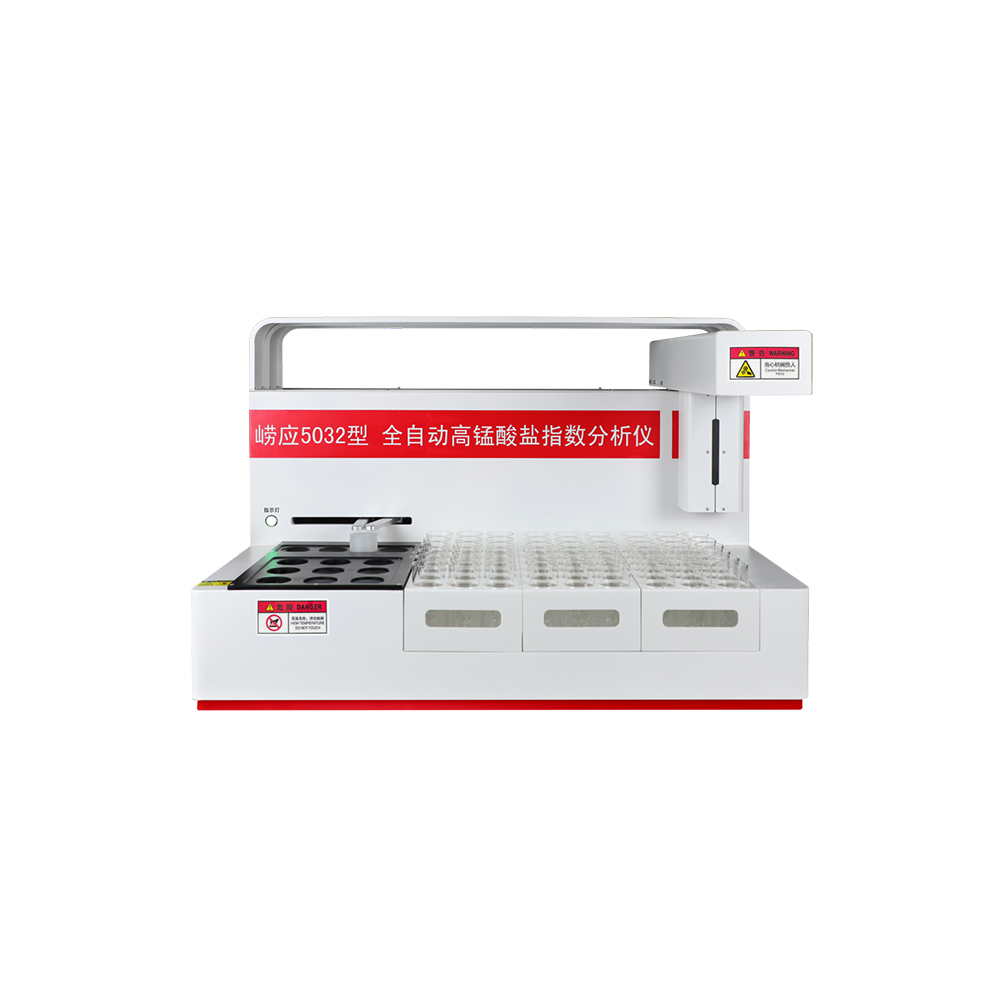
Some regulatory frameworks track highly specific organic parameters. This requires dedicated shore-based analytical hardware. Consider the integration of an Automatic Permanganate Index Analyzer. You must keep external sample line lengths absolutely minimal. Long suction lines allow unwanted biological degradation before the sample ever reaches the analyzer. These advanced units also demand strictly temperature-controlled enclosures. Temperature stability ensures chemical reagent efficacy. It guarantees high analytical precision across changing seasons.
Sometimes incoming sample matrices are exceptionally complex. Your field deployment might require aggressive pre-concentration steps. In these scenarios, outline the physical prerequisites carefully. Incorporating an Intelligent Water Sample Evaporation Concentrator involves specific structural accommodations. It carries substantially heavier electrical loads than simple sondes. Planners must aggressively factor in power budget limits. You must also engineer adequate enclosure ventilation to manage excess heat and vapors safely.
Disparate devices must communicate and operate flawlessly together. You need to synchronize internal flow rates across all sampling loops. Match the sample extraction timing precisely. Coordinate your outbound data telemetry protocols. Seamless synergy between continuous multi-parameter sondes and discrete automated analyzers ensures robust, unified reporting. When systems operate in harmony, you avoid conflicting data timestamps and pump cavitation issues.
Hardware installation represents only the physical half of deployment. The logical half relies entirely on calibration and validation. A newly installed sensor provides zero value until you mathematically tether it to reality. Strict validation protocols protect your organization during regulatory audits.
Factory calibration provides a helpful starting point. However, it is never sufficient for official field deployment. Environmental variables change rapidly during transit. You must perform an exhaustive on-site calibration on day zero. Always use fresh, NIST-traceable standard solutions. Match these liquid standards to your expected environmental baseline conditions. You must also adjust calibration routines for local altitude. Correcting for site-specific barometric pressure is mandatory for accurate dissolved oxygen readings.
The first 48 hours dictate long-term project success. You must conduct parallel grab-sampling during this critical initial window. Send these physical water samples immediately to a certified local laboratory. Compare your live sensor outputs directly against the certified lab results. This parallel testing validates your baseline accuracy definitively. It proves the field equipment perfectly matches established laboratory benchmarks.
Write absolutely everything down. Memory fails quickly in field operations. Create a highly detailed, site-specific installation log. Document every single sensor serial number. Record the exact GPS coordinates. Log the precise physical deployment depth. Capture all initial baseline readings and calibration offset values. Rigorous documentation satisfies stringent regulatory audit requirements easily. It also establishes clear operational accountability across your entire technical team.
A methodical, compliance-aware installation process remains essential. It represents the only reliable way to transform raw sensor capabilities into defensible, actionable data. Proper site selection ensures you capture representative water conditions. Meticulous hardware mounting guards against environmental damage. Rigorous calibration protocols lock in analytical accuracy. Together, these steps protect your capital investment.
Decision-makers should evaluate equipment vendors carefully. Do not base decisions purely on raw hardware specifications. You must heavily prioritize the availability of deployment engineering support. Seek out vendors offering professional site audit services. Demand comprehensive, clear integration documentation for all complex setups. True vendor value lies in field implementation support.
Protect your environmental data integrity today. We strongly prompt readers to request a professional site evaluation immediately. Consult detailed technical integration guides tailored specifically for your unique monitoring environment. Proactive planning always yields superior analytical results.
A: Depth depends entirely on the target parameter and the specific water body type. Typically, you should advise placement below the lowest expected ice or drought drawdown level. However, ensure the probe remains safely above the benthic boundary layer. This precise positioning successfully avoids unwanted sediment intake.
A: Most units require a specific "wetting-in" period. Certain electrochemical sensors, particularly pH or dissolved oxygen probes, need time to equilibrate naturally with the local water matrix. This mandatory stabilization window typically ranges from 15 minutes to several hours before yielding fully reliable data.
A: The primary culprits are almost always mechanical. Improper cable strain relief causes wire breakage. Water ingress from poorly sealed electrical connectors destroys internal boards. Rapid biofouling due to stagnant, poorly chosen placement locations quickly blinds optical sensors and clogs conductivity cells.
A: Yes, retrofitting remains highly feasible. However, it requires auditing the existing site infrastructure carefully. You must thoroughly check the available power budget, physical footprint, and telemetry bandwidth. Advanced analyzers require substantial energy to support high-draw pumps and heavy data-transmission requirements.


