
Views: 0 Author: Site Editor Publish Time: 2026-06-10 Origin: Site


Stricter environmental regulations shape the global industrial landscape today. Heavy penalties for non-compliance force organizations to rethink their strategies immediately. We see a rapid shift from slow manual sampling to continuous, automated data collection. Navigating a fragmented vendor landscape presents a major challenge for enterprise buyers. Facility managers struggle to evaluate long-term hardware viability beyond the initial purchase. They also face hurdles ensuring strict data integrity across multiple global locations. Facilities simply cannot afford operational blind spots. This article provides a rigorous, evidence-based framework for shortlisting enterprise-grade monitoring solutions. You will discover practical ways to bridge field sensors and lab analytics seamlessly. We outline how to implement robust systems. These frameworks safeguard your compliance and operational efficiency. By following these guidelines, you can protect your brand reputation in highly scrutinized markets effectively.
Transitioning to advanced automated monitoring requires prioritizing open-architecture IoT integration over proprietary, closed ecosystems.
Real-time sensors must be paired with reliable physical sampling and high-tier lab equipment for complete regulatory compliance and deep-dive diagnostics.
Vendor evaluation should heavily weigh biofouling prevention, calibration stability, and global support infrastructure, not just baseline sensor accuracy.
A phased proof-of-concept (POC) is critical to uncover site-specific environmental interferences before global rollout.
Reactive manual testing falls short in modern industrial settings. Technicians grab periodic samples, leaving massive temporal gaps in data. These gaps expose companies to significant regulatory risk. Modern regulatory audits demand high-frequency, continuous insights. Standards like EPA guidelines and ISO 14001 require verifiable precision. Defining the problem clarifies our need for better tools. Legacy testing exposes facilities to sudden regulatory fines. We need continuous data streams.
What does a successful deployment look like? We define success through clear, measurable outcomes. You must target specific operational improvements across your entire facility network. Modern enterprise architectures demand reliable data above all else.
Verifiable data audit trails ensure immediate compliance reporting during surprise inspections.
Reduced operational downtime keeps production schedules strictly on track.
Early warning capabilities spot chemical anomalies before they escalate into disasters.
Lower long-term maintenance overhead frees up internal engineering resources.
Advanced monitors mitigate severe operational risks daily. They prevent catastrophic discharge events entirely. These proactive alerts protect your brand reputation. Global markets heavily scrutinize environmental practices today. A single public contamination event destroys years of goodwill. Upgraded systems deliver undeniable peace of mind. They transform compliance from a burden into a streamlined process. You gain complete visibility into your effluent streams.
Modern compliance demands a multi-tiered technological approach. Continuous inline and online sensors form your first defense line. IoT-enabled multi-parameter probes track baseline metrics constantly. They monitor pH, dissolved oxygen, turbidity, and conductivity without pause. Facility operators receive immediate alerts during sudden parameter deviations. This immediate feedback loop prevents minor issues from compounding into massive violations.
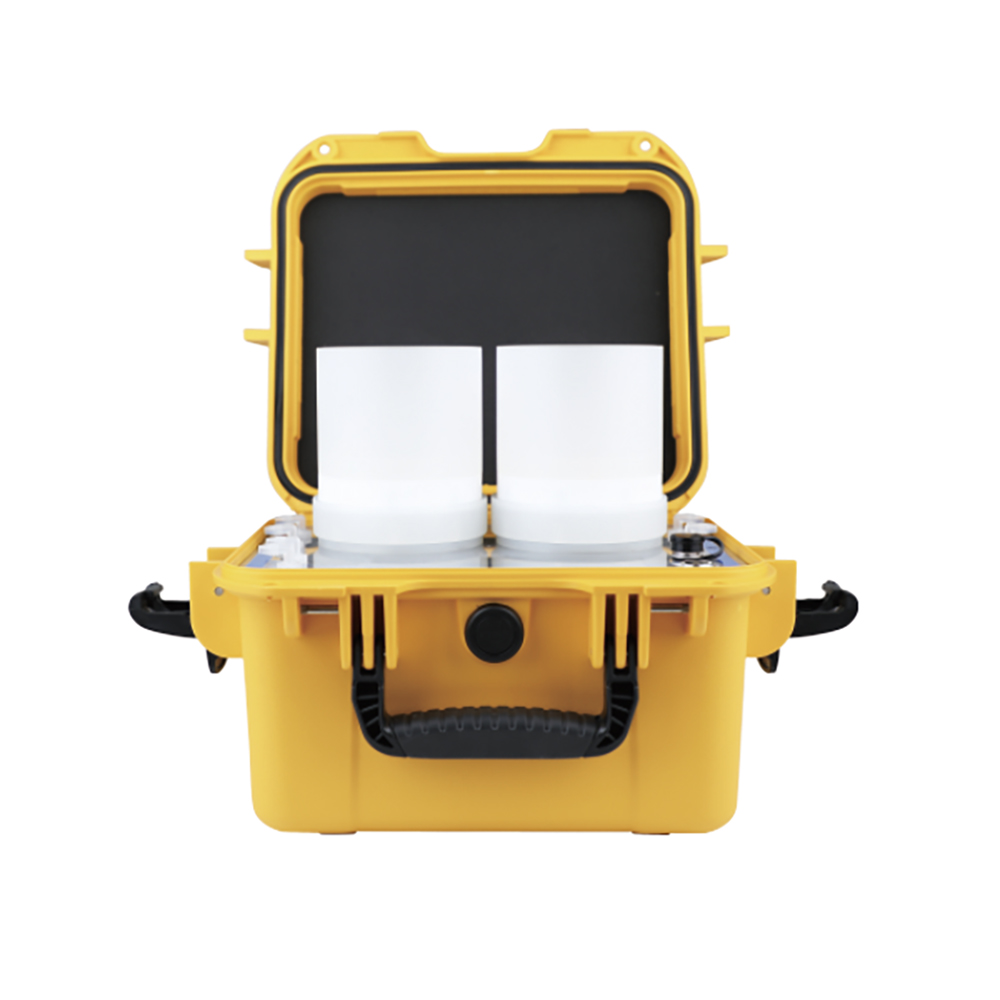
However, real-time sensors cannot do everything alone. You must routinely draw physical samples for secondary verification. Proper field preparation tools ensure strict sample integrity. We highly recommend using a Portable Multi-purpose Vacuum Filter on-site. It clarifies and stabilizes complex samples efficiently. This crucial step prevents chemical degradation before the samples reach the lab. Reliable filtration removes suspended solids quickly. It gives your lab technicians a pristine sample for precise analysis.
Advanced laboratory diagnostics handle the heavy analytical lifting. Automated field units have defined detection limits. Sometimes, an automated Water Quality Monitor flags a complex chemical anomaly. It tells you something is wrong but cannot identify the specific compound. Facility labs must then deploy high-precision instrumentation. Technicians rely heavily on an Ion Chromatograph for deep diagnostics. This equipment isolates and quantifies specific trace anions and cations. It provides the exact molecular breakdown of the anomaly. Lab verification validates field sensor data perfectly. You need both systems working in harmony.
Look past upfront hardware costs during procurement. Focus purely on features driving actual operational outcomes. Evaluate the anticipated lifespan of sensor consumables carefully. Calculate realistic sensor degradation rates in harsh industrial conditions. Understand the required frequency of manual recalibration. Frequent maintenance quickly drains operational budgets. You must select robust sensors designed for longevity. Equipment longevity determines the true viability of your investment.
Scalability and telemetry define modern IoT integration capabilities. Assess remote data transmission capabilities thoroughly. Cellular connections work well for urban sites. LoRaWAN networks suit sprawling industrial campuses perfectly. Satellite connections bridge the gap for ultra-remote facilities. Emphasize open APIs during your vendor selection process. Open architecture prevents frustrating vendor lock-in. It ensures seamless compatibility across your existing SCADA or cloud ERP systems. You must own and control your data routing.
Security and compliance remain non-negotiable elements. Demand transparent data encryption standards everywhere. Encryption must cover the journey from the physical sensor to the cloud. Require verifiable compliance testing from every vendor. Your system must meet regional water quality testing protocols specifically. Weak security invites catastrophic data breaches.
Here is a brief comparison chart of common telemetry options:
Telemetry Protocol | Best Deployment Environment | Data Bandwidth Capacity | Hardware Power Draw |
|---|---|---|---|
Cellular (4G/5G/LTE-M) | Urban and suburban industrial facilities | High | Moderate to High |
LoRaWAN | Large sprawling manufacturing campuses | Low | Very Low |
Satellite Comms | Remote off-grid mining or extraction locations | Low | High |
Deploying hardware exposes systems to harsh environment realities. Inevitable challenges threaten sensor accuracy daily. Biofouling quickly coats submerged probes in organic matter. Sediment accumulation blocks vital sensor measurement pathways. Extreme temperature fluctuations cause rapid calibration drift. You must evaluate built-in auto-cleaning mechanisms rigorously. Mechanical wipers clear optical lenses effectively. Compressed air blasts remove stubborn debris from probe housings. Biocidal coatings offer passive resistance against algae growth.
Data overload causes serious alert fatigue across teams. Generating too much noisy data paralyzes decision-making processes. Operators quickly ignore endless minor warnings. A robust solution must feature highly intelligent software. It distinguishes between minor baseline fluctuations and genuine actionable events. Smart algorithms smooth out temporary spikes. They only trigger alarms when sustained deviations occur. This focus protects your operators from exhaustion.
Infrastructure gaps derail global rollouts easily. Do not rely entirely on cloud-dependent monitors. Remote global facilities often suffer unstable power grids. Intermittent network connectivity disrupts continuous data uploads constantly. You must mitigate these physical risks strategically.
Implement edge-computing protocols for localized data processing.
Install internal memory drives for offline localized data logging.
Deploy reliable battery backups to survive sudden grid failures.
Configure offline mechanical alert triggers for on-site personnel.
Assessing global support narrows your vendor shortlist quickly. Filter vendors based on their localized supply chains. You need replacement spare parts delivered fast. Regional technical support availability guarantees swift troubleshooting. Examine their Service Level Agreements (SLAs) closely. They must apply directly to your specific operating countries. A vendor lacking local technicians poses a massive operational risk. Unresolved equipment failures lead to immediate compliance violations.
Structure your proof-of-concept (POC) carefully. We strongly recommend running a 60-to-90-day pilot program. Run new automated units alongside existing legacy systems. Measure calibration hold times rigorously during this period. Track false-positive alert rates weekly. Log the actual maintenance man-hours required. A proper POC reveals hidden environmental interferences early. It proves the hardware works exactly as advertised.
Take decisive next-step actions immediately following the pilot. Structure a strict Request for Proposal (RFP). Force vendors to guarantee key performance metrics contractually. Ask them to detail their post-installation onboarding processes. Demand transparency regarding ongoing firmware updates and hardware upgrades. Clear communication prevents costly misunderstandings later.
Selecting the right equipment is a strategic infrastructure decision. It represents far more than a simple hardware purchase. True compliance demands a rigorous hybrid approach. Combine robust real-time field sensors with disciplined lab verification methodologies. This specific synergy forms the most defensible compliance strategy available. It protects your facilities against rigorous global audits. Continuous visibility keeps your operations safe and compliant.
Take proactive action today. Audit your current manual sampling workflows comprehensively. Identify recurring bottlenecks and missing data gaps. Request a technical consultation to scope a targeted pilot program. Modernize your monitoring infrastructure for lasting operational resilience. You will streamline compliance and safeguard your industrial operations.
A: Manual calibration frequency varies significantly. It depends heavily on the specific parameter, the water matrix, and built-in auto-cleaning features. Some robust sensors hold calibration for several months. Others in highly fouling environments require checks every few weeks. Always approach "zero-maintenance" vendor claims with caution. Regular verification ensures ongoing regulatory compliance and dependable sensor accuracy.
A: Yes, modern monitoring solutions integrate seamlessly into SCADA architectures. Most enterprise-grade sensors support standard industrial communication protocols. These include Modbus, SDI-12, and 4-20mA analog outputs. Newer IoT-enabled controllers also feature modern REST APIs. This allows direct data streaming into cloud ERPs and advanced visualization platforms. You retain full control over your telemetry routing.
A: Rely on real-time sensors for continuous trend-tracking and immediate anomaly detection. They alert you instantly when baselines shift. However, field probes cannot identify complex chemical breakdowns accurately. You must use lab-based chromatography for legally defensible compliance. Lab instruments provide highly specific trace-level quantification. This deeper analysis is necessary for definitive root-cause isolation.


